APC ACRD200 Schneider Inrow Fluid Cooled Rack Network Data Center Rd Acrd
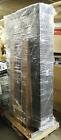
( Brand: Apc ), ( Manufacturer Part Number: ACRD200 ), ( Part Type: Fluid Rack Data )
Review APC Schneider Inrow Fluid Cooled System Rack Network Data Acrd
The Schneider Electric ACR D200 InRow Data Center Cooling Unit is an efficient and reliable solution for computing environments in need of precise temperature and humidity control. This in-row Cooling System is part of Schneider Electric's ACP (Active Cable Power) family of products and is specifically designed for network data centers.
The ACR D200 utilizes an advanced fluid cooling technology that offers high cooling capacity with minimal water usage. Its in-row design allows the cooling unit to be installed at the row level, ensuring that hot air is extracted directly from the rack and replaced with cool air, contributing to improved temperature uniformity and increased energy efficiency.
The ACR D200 InRow Cooling Unit boasts a high efficiency cooling system, with a maximum standard efficiency rating of up to 32% for the cooling stage and 92% for the heat exchanger. The cooling system's modular design allows for easy maintenance and scalability, ensuring that the cooling capacity can be expanded as your IT load grows.
Schneider Electric's ACR D200 features an intelligent control system that allows for precise temperature and humidity management. The control system also includes built-in monitoring capabilities, providing real-time data on cooling performance and IT equipment temperatures, making it easier to optimize cooling usage and minimize energy waste. Additionally, the ACR D200 integrates with Schneider Electric's EcoStruxure IT platform, enabling remote monitoring and management of your cooling infrastructure.
The ACR D200 InRow Cooling Unit is also highly customizable to fit a variety of data center environments. It offers multiple options for airflow patterns, configurations, and air pressures, allowing you to tailor the cooling solution to your specific IT requirements. The cooling unit's compact design and modular components enable easy installation and integration with your existing data center infrastructure.
In summary, the Schneider Electric ACR D200 InRow Data Center Cooling Unit is an advanced and versatile cooling solution that provides high cooling capacity, efficient energy usage, and precise temperature and humidity control for network data centers. Its modular design, intelligent control system, and optional customizations make it the ideal choice for maximizing the reliability, scalability, and performance of your IT infrastructure.
Schneider APC ACRD200 Inrow Fluid Cooled Rack-mounted Data Center AC Unit: Pros, Cons, and Conclusion
Introduction:The Schneider Electric APC Inrow Cooling System, specifically the ACRD200 model, is a widely used data center cooling solution. This in-rack cooling system invests cooled water directly into the hot aisle, making it an efficient alternative to traditional hot and cold aisle containment systems. Here's a balanced look at the Schneider APC ACRD200, covering its fundamental pros, cons, and recommendations.
Pros: 1. Energy Efficiency:In-row cooling offers better energy efficiency as it only cools the hot air immediately surrounding the servers. Barry M. Consolidates hot air, reducing energy consumption and the total airflow required.
2. Reduced Rack Height:ACRD200's compact design saves vertical space by requiring minimal overhead clearance. This results in a more dense rack layout and a higher server capacity, making it suitable for data centers with limited floor space.
3. Optimized Cooling Performance:Inrow cooling ensures consistent cooling and more robust temperature control compared to traditional cooling methods. In addition, it minimizes the mixed air circulation and hot spots that can potentially impact server performance.
4. Scalability:With its modular design, the ACRD200 can easily be expanded to accommodate future requirements. Moreover, you can scale up the system without altering server arrangements.
5. Enhanced Density Support:The in-row cooling system can be installed in rows with dense server configurations, including cabinets with high power densities and blade servers.
Cons: 1. Complex Installation Process:Installation and maintenance of an in-row cooling system can be more complicated than traditional methods, involving specialized knowledge and resources.
2. Higher Upfront Cost:In-row cooling systems are generally more expensive than traditional methods at the outset. However, the long-term benefits, such as energy savings and space efficiency, may offset these initial costs.
3. Limited Flexibility:An in-row cooling system may not be flexible enough to adapt to changes in the server layout or rack configuration, making it potentially less suitable for data centers with dynamic IT requirements.
4. Dependence on Maintenance:To optimize cooling performance and maintain system longevity, the ACRD200 requires regular maintenance. Regular checks and routine filter cleaning are essential.
Conclusion:Utilizing Schneider Electric's APC ACRD200 In-Row Cooling System in a data center setup offers several advantages that can lead to enhanced cooling performance, better energy efficiency, and a more compact data center footprint. Despite the complex installation process and higher upfront costs, this cooling solution can prove to be a valuable long-term investment, particularly in situations where power densities are high or space is at a premium. Evaluating the specific cooling requirements, constraints, and budget of a data center will help organizations make a well-informed decision on the use of such in-row cooling systems.
Recommendation:If you're considering implementing an in-row cooling system, such as the Schneider Electric APC ACRD200, we recommend careful evaluation of the costs and benefits. Consider factors such as the size of the data center, your cooling requirements, and the available maintenance resources. It's also essential to consult with a cooling solutions expert and Schneider Electric, ensuring that this innovative cooling system is the best fit for your data center's specific needs.
Details:
This eliminates air mixing and provides a predictable cooling architecture. Monitors and actively adjusts cooling capacity to ensure proper server inlet temperatures.
It appears to be unused. Through the microprocessor controller, visibility into operation and health of unit is provided.
part #: acrd200 price
- $2005.94
specifications acrfrigeratio:
- brand: Apc
- mpn: Acrd200
- part type: Fluid Rack Data
Ratings:
- Excellent ! 05-24-18
- Good 05-15-18
- Amp arrived with only 1 of 3 channels working. Received full refund. Can trust. 05-13-18
- all was.k. 05-17-18
- Great item Thanks 05-25-18
Returns acrfrigeratio:
- policy: returns accepted
- type: Money Back
- paid by: Buyer
- time: 30 Days
Offer acrfrigeratio:
- bids: 0
- Sold: 0
- quantity: 1
- Started: June 6, 2018, 8:31 am
- best offer: true
Shipping acrfrigeratio:
- type: Freight
Payments acrfrigeratio:
- PayPal
General acrfrigeratio:
- business industrial > mro industrial supply > hvac > hvac units business industrial > acrefrigeration units hvac units
- in stock: Yes
- condition: New other see details
Seller acrfrigeratio:
- zipcode: 21218
- city: Baltimore, Maryland
Apc ACRD200 Is Similar To:
- 0j-0011 Apc Inrow 300mm Cond (35.4% similar) New inrow 300MM condo pump spare - part 0J-0011 manufacturer number...(October 11th, 2017)
- 731304250807 Apc Inrow Rp (30.1% similar) Route product id 3474. 5IN Np's Apc inrow RP - air-conditioning cooling system adapter kit troughs, partitions, height adapters and spare parts for complete infrastructure configurations. Whats in the box installation guide Apc inrow RP air-conditioning cooling system adapter kit type package ...(April 1st, 2017)
- 731304250814 Apc Inrow Rp (30.1% similar) Route product id 25IN MPT-1. 5IN Np's Apc inrow RP - air-conditioning cooling system adapter kit 3 ft troughs, partitions, height adapters and spare parts for complete infrastructure configurations...(April 1st, 2017)
- Acrc301h Apc Schneider Inrow Chilled (55.8% similar) Top and bottom chilled water connections: allows to be connected from the top, if routing overhead, or bottom, on a raised floor. Original manufacturer: inrow RC, 300MM, chilled water, 208-230V, 50 60HZ - ht active airflow control: monitors and actively adjust cooling unit in containment systems, ...(November 11th, 2017)
- Acrc301s Apc Schneider Inrow Chilled (55.8% similar) It is new, has never been installed. Leak detection: notifies user in the event of a water within coiling unit. Original manufacturer: inrow RC, 300MM, chilled water, 100-240V, 50 60 Hz - st active airflow control: monitors and actively adjust cooling unit in containment systems, while providing ...(November 11th, 2017)
- Apca4000 Apc Network Air 4000 (35.1% similar) Unit works great...(November 5th, 2017)
- Aprp500 Apc Inrow Chilled Water (44.4% similar) Also have connecting lines. 2 Apc inrow RP chilled water systems. Both units have never been used...(March 1st, 2018)
- Apsc1000 Apc Inrow Sc 300mm (37.9% similar) Runs on 50-60HZ 200-250V single phase power. It would be perfect for a converted space that doesn't currently have air conditioning, saving thousands over traditional unit. It even features an integrated pump to remove condensate liquid for completely unattended operation. The system is currently ...(June 2nd, 2017)
- System Liebert 22 Ds077au Room Datacenter Apc Server Ds Cooling Hvac Ton 2009 (19.3% similar) 4 evaporator fan 1 Fla 11 hp 7 Lara refrigerant r 407C lbs CT 1 lbs CT 2 field charged design pressure pig high 315 low 165 date e 2009 shipping and handling charges are separate from sale price. 5 compressor 1 rl liberty D's precision cooling system VS077AU 35 wide 109 long x 76 high 2450 lbs, 22...(July 23rd, 2015)
- W875-2010 Apc Inrow Rc-sc Filter (44% similar) Apc inrow RC sc filter 1/2 washable - W875-2010 each box comes with filters. Brand new in the box...(October 6th, 2017)
- Apc Schneider Fm35m-eba-esd 10 Ton Computm Air Conditioner 3ph Downflow 213428 (34.2% similar) Most problems can be worked out if we just communicate. Your phone number is required for contact prior to delivery purposes. 13 seer single-package air conditioners and split system heat pumps packaged may not be installed in any state are only sold for replacement parts. 2015 federal regional ...(August 18th, 2023)
