DANFOSS TRD00495 Service York Sensor Psia First AKS1008 0-70 IPC3
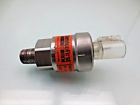
( Brand: Danfoss ), ( Manufacturer Part Number: TRD00495 ), ( Part Type: Sensor )
Review DANFOSS Service York Chiller Sensor 0-70 Psia
Product Overview:The TRD00495 Danfoss Service York Sensor AKS1008 is a crucial component in pressure control systems, specifically designed for use in low-pressure applications ranging from 0 to 70 psia (pounds per square inch absolute). This sensor is categorized under the IP Class 3 protection rating, signifying its ability to operate effectively even in potentially harsh environments, such as those that may contain applied water in the form of spray, splashing, or external ice formation.
Sensor Design and Components:The TRD00495 Danfoss Service York Sensor AKS1008 is a high-precision, factory calibrated transducer built to provide reliable pressure measurement. It employs an all-welded construction made primarily from stainless steel material, ensuring long-lasting durability and corrosion resistance. The sensor's tailored design includes an industrial diagnostic switch that simplifies wiring, installation, and commissioning processes.
Operating Performance:The pressure sensor analyzes input pressures and converts them into an electrical output signal. This signal adheres to the J1939 protocol, which allows seamless communication and interaction with other industrial control systems. Its high-precision measurement capabilities offer accuracy with an uncertainty of only /- 0.05% FS (full scale) or /- 0.15 psig, depending on the specific application.
Installation and Integration:The TRD00495 Danfoss Service York Sensor AKS1008 is easy-to-install due to its convenient mounting options. It can be fixed directly to the pipeline using various mounting kits and clamps (sold separately). Additionally, the wide bore diameter on the sensor provides compatibility with several pipeline inner diameters, enabling versatile integration into a variety of system configurations.
Key Features:1. Reliable and precise pressure measurement: The TRD00495 Danfoss Service York Sensor AKS1008 is an excellent choice for applications that demand accurate and dependable pressure measurement. With a wide measuring range of 0 to 70 psia, it is suitable for diverse industries and systems.
2. Superior design and durability: Engineered to withstand harsh environments, this high-quality sensor features all-welded stainless steel construction and an industrial diagnostic switch, making it a sturdy and reliable component for industrial applications.
3. Seamless communication and integration: The J1939 communication protocol enables uncomplicated data sharing with other control systems. With a wide bore diameter, this sensor can easily adapt to various pipeline inner diameters, simplifying integration into different system configurations.
4. Precision measurement properties: With high accuracy and low uncertainty, the TRD00495 Danfoss Service York Sensor AKS1008 delivers consistent readings even in fluctuating pressure environments.
5. broad operating temperature range: Functioning effectively within temperatures ranging from 40 F to 140 F (4 C to 60 C), this pressure sensor can endure various temperature conditions found within industrial settings.
In summary, the TRD00495 Danfoss Service York Sensor AKS1008 offers reliable and accurate pressure measurement for low-pressure applications venturing into challenging environments. Its sturdy construction, wide compatibility, seamless communication, precision capabilities, and broad temperature range make it an excellent addition to a wide range of industrial systems.
Pros and Cons of Buying Danfoss AK-1008 0-70 PSIA IPC3 First Sensor
The Danfoss AK-1008 0-70 PSIA IPC3 First sensor is a pressure and temperature transmitter designed for various refrigeration and air conditioning applications. Here are the potential advantages and disadvantages of investing in this sensor:
Pros:1. High Accuracy: This sensor offers a high level of accuracy ( /- 0.15% of FS), essential for precise monitoring and control of refrigeration systems.
2. Wide Operating Range: The sensor's operating range of 0-70 PSIG (0-4.8 bar) and its temperature range from -40 F to 257 F (-40 C to 125 C) cater to a broad range of refrigeration and air conditioning applications.
3. Industrial-Grade Design: The AK-1008 is industrial-grade, offering robustness and reliability, perfect for harsh environments within those industries.
4. Ease of Installation: Danfoss sensors are known for their user-friendly design. The AK-1008 is no exception, with quick and straightforward installation, reducing downtime and installation costs.
5. Advanced Features: This sensor's intelligent features, such as built-in diagnostics and easy-to-interpret alarms, provide system operators with valuable information, enhancing overall system performance and efficiency.
Cons:1. Price: The Danfoss AK-1008 may have a higher price point compared to some competitors. While the additional features and high accuracy may justify the investment, it is essential to consider the financial implications for your specific application.
2. Calibration Requirements: Depending on the application and usage, this sensor may require regular calibration to guarantee its maintain high precision. Calibration costs and frequency will depend on the factor loading and operating conditions.
3. Limitations: The AK-1008 is designed for specific refrigerant types and pressures. It may not be suitable for non-standard refrigerants and those outside of its operating range.
Conclusion:Considering its high accuracy, broad operating range, industrial design, ease of installation, and advanced features, the Danfoss AK-1008 0-70 PSIA IPC3 First Sensor is an excellent choice for applications requiring a high level of precision and reliability in refrigeration and air conditioning systems. However, its higher cost and occasional calibration requirements are factors to consider. Ultimately, it is crucial to weigh the pros and cons against the specific needs and expectations of your application.
Recommendation:If your application demands high accuracy, a wide operating range, rugged design, and advanced features, the Danfoss AK-1008 0-70 PSIA IPC3 First Sensor is an excellent investment. However, if cost is a significant concern, you may want to explore alternative sensors with comparable features but more affordable price points. A thorough evaluation of the application requirements and review of competitors' offerings is crucial before making a decision.
Details:
part #: trd00495 price
- $527.06
specifications acrfrigeratio:
- brand: Danfoss
- mpn: Trd00495
- part type: Sensor
Offer acrfrigeratio:
- Started: April 22, 2018, 1:50 pm
- bids: 0
- Sold: 0
- best offer: true
- quantity: 1
Ratings:
- Amazing seller!! 04-21-18
- Great deal!!!! 04-20-18
- Aa 04-21-18
- Item as described, THANK YOU! 04-20-18
- Good seller will shop again 04-21-18
General acrfrigeratio:
- in stock: Yes
- condition: Used
- business industrial > mro industrial supply > hvac > hvac units business industrial > acrefrigeration units hvac units
Seller acrfrigeratio:
- city: Charlotte, North Carolina
- zipcode: 28206
Returns acrfrigeratio:
- policy: returns accepted
- details: Restocking fee: No
- time: 60 Days
- paid by: Buyer
- type: Money Back
Shipping acrfrigeratio:
- handling: 1 days
- type: Calculated
- cost: $5.15
Payments acrfrigeratio:
- PayPal
